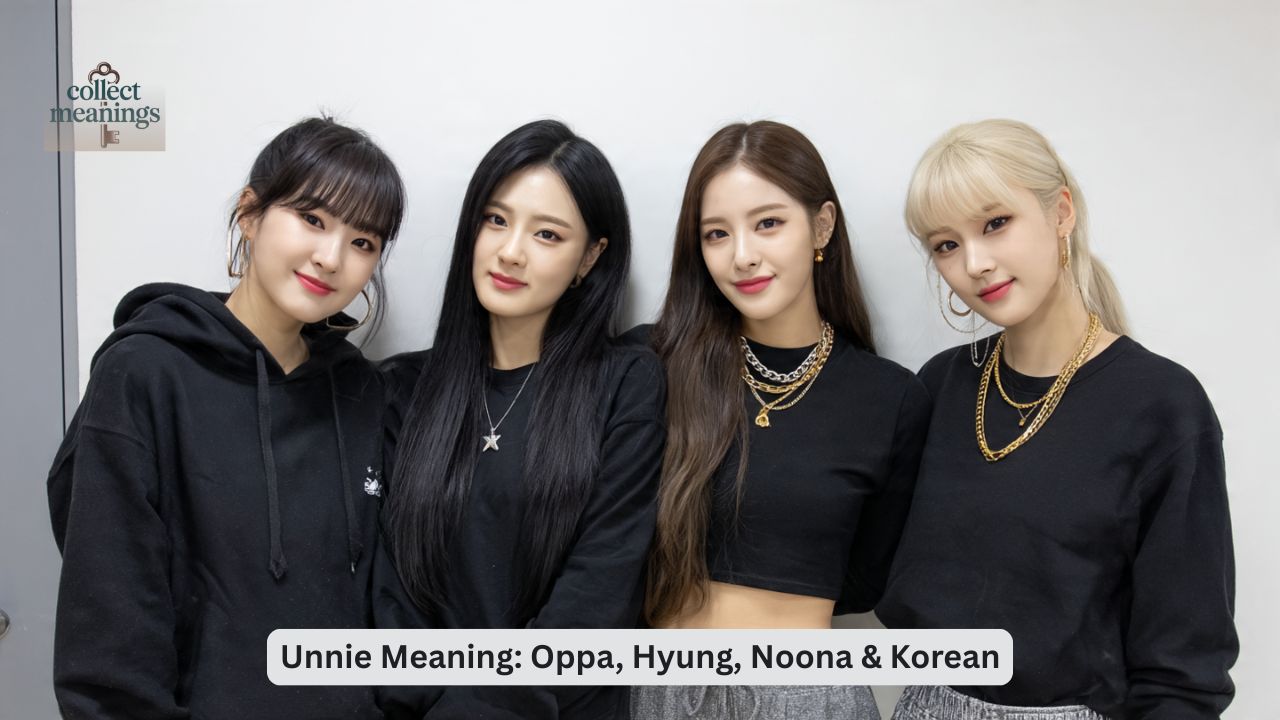
Unnie Meaning — In Korean, “Unnie” (언니) is a term used by females to address an older sister or an older female friend. It represents respect, affection, and closeness in relationships.
Korean girls often call their real sisters, close friends, or even favorite female celebrities “Unnie” to show warmth and emotional bonding.
What Does “Unnie” Mean in Korean?
In Korean, “Unnie” (언니) is used by females to address an older sister or an older female friend. It’s more than just a title—it expresses respect, care, and closeness in relationships. Girls often use it to show warmth and affection toward someone they trust.
Unnie Meaning All Language
What Is the Meaning of Unnie?

The meaning of “Unnie” goes beyond just “older sister.” It highlights emotional bonds, familiarity, and cultural respect. Whether used with siblings or friends, it adds a sense of closeness that makes Korean culture unique.
Unnie Meaning in Korean
In Korean culture, “Unnie” is a soft, affectionate way for women to address older females. It’s commonly used not only with family members but also with friends and idols. It reflects love, trust, and the Korean value of hierarchy in relationships.
What Does “Unnie” Mean in Korea?

In Korea, “Unnie” represents both age respect and emotional connection. It’s widely used among girls to address older females they admire or care for. Whether in daily life, dramas, or K-pop culture, “Unnie” has become a familiar and loved expression.
What About Unnie?
“Unnie” isn’t just about age—it’s about bonding. It’s a way to make relationships warmer and friendlier. When a girl calls someone “Unnie,” it means she values her as a guide, a sister figure, or simply someone she feels safe with.
The Difference Between Oppa vs Hyung, and Nuna vs Unnie
Korean honorifics differ based on gender. Girls use “Oppa” for older males and “Unnie” for older females, while boys use “Hyung” for older males and “Nuna” for older females. These terms keep relationships respectful while also expressing affection.
What’s the Difference Between Unnie and Noona?

Both “Unnie” and “Noona” mean “older sister,” but the speaker’s gender changes the word. Girls say “Unnie,” while boys say “Noona.” The meaning stays the same, but the usage depends on who is speaking.
“Unnie” vs Other Korean Honorifics
Unlike generic titles, “Unnie” is personal and affectionate. It differs from formal honorifics like “Sunbaenim” (senior) or “Seonsaengnim” (teacher), as it’s used in close relationships. This makes “Unnie” feel warmer and more intimate.
What Does “Nuna” Mean in Korean?
“Nuna” (누나) is what boys use to call an older sister or older female friend. Just like “Unnie,” it carries respect and affection. It often shows that the younger boy feels close and comfortable with the older female.
When to Use Oppa, Unnie, Hyung, and Nuna
These honorifics are used in everyday life depending on gender and age. Girls use “Oppa” and “Unnie,” while boys use “Hyung” and “Nuna.” They are most common among siblings, friends, and even in fan culture when addressing idols.
Who Can Use Oppa, Hyung, Nuna, and Unnie?

Only Koreans who are younger use these terms for someone older. For example, a girl can’t call her younger brother “Oppa,” but she can call an older male friend “Oppa.” These words are tied to both age and relationship dynamics.
Who Can Use “Unnie” in Korean and When?
“Unnie” is strictly used by females. A girl may call her sister, older friend, or a favorite female celebrity “Unnie.” It’s most natural in informal or friendly settings where closeness and affection are expressed.
Why Do Koreans Say “Unnie”?
Koreans say “Unnie” because respect for age and hierarchy is deeply rooted in their culture. It’s not just about family—it shows politeness, bonding, and warmth in friendships and social connections.
Does Oppa Mean Boyfriend?
“Oppa” literally means “older brother” when said by girls, but its meaning changes depending on context. Many women also call their boyfriends “Oppa” as a term of endearment, which is why it’s often associated with romance in K-dramas.
Difference Between Unnie, Noona, Oppa, and Hyung

Korean culture has special words for addressing elders. Unnie Meaning is for girls to older females, while Noona is for boys to older females. Oppa is used by girls for older males, and Hyung is used by boys for older males. Each term reflects respect and relationship closeness.
Unnie in Korean Culture
Unnie Meaning is more than just “older sister”; it reflects the respect and emotional closeness in Korean relationships. Girls use it for sisters, friends, or admired female figures.
How to Use Unnie Naturally
In daily life, Korean girls say Unnie Meaning when talking to someone older in a friendly way. It makes the bond warmer and more respectful without sounding too formal.
Unnie and Korean Honorifics

The word Unnie Meaning is part of a larger system of honorifics like Oppa, Noona, and Hyung. Each term carries meaning, and together they shape the way Koreans show respect in social life.
Frequently Asked Questions
What does Unnie mean in Korean?
Unnie Meaning “older sister” when used by a girl in Korean.
Who can say Unnie?
Only females use “Unnie” to address an older female.
Is Unnie used for friends or family?
Yes, girls use it for both older sisters and older female friends.
What’s the difference between Unnie and Noona?
Girls say “Unnie,” while boys say “Noona” for an older sister.
Can boys use Unnie in Korean?
No, boys use “Noona” instead of “Unnie.”
Is Unnie formal or informal?
Unnie Meaning is informal and used in close, friendly relationships.
Do K-pop idols get called Unnie?
Yes, female idols are often called “Unnie” by younger female fans.
What is the meaning of Unnie in K-dramas?
It means older sister or trusted older female character.
Why do Koreans say Unnie?
They say “Unnie” to show respect, love, and closeness to an older female.
Does Unnie mean best friend?
Not exactly, but it can be used for a close older female friend.
Conclusion
The word “Unnie Meaning” is more than just a title in Korean—it reflects respect, closeness, and affection between younger and older females. Whether used in families, friendships, or even in K-pop culture, it shows the importance of relationships in Korean society.
Understanding terms like Unnie, Oppa, Hyung, and Noona helps you connect better with Korean culture and language, making conversations more natural and meaningful.

Chloé is a creative content writer who writes engaging articles about word meanings and deep interpretations.